

Coliving might be more expensive than a private Airbnb if you compare room rates in isolation. Once you factor in coworking fees, utilities, and the hidden cost of nomad isolation, the calculation changes.
For stays of 1–3 months, coliving consistently wins on total value — not just money.
The debate comes up in every nomad group chat. Someone posts their Airbnb monthly rate and asks: why would anyone pay more to share a space?
It’s a fair question. And the short answer is: they usually aren’t paying more. The longer answer is that they’re buying something different entirely.
What You’re Actually Comparing
The comparison most nomads make when evaluating coliving vs Airbnb is: room rate vs room rate. That’s not the right comparison.
When you book an Airbnb for a month, you pay for:
- The room or apartment
- Utilities (usually included, sometimes not)
- WiFi (quality varies wildly)
Then you add:
- Coworking membership or café tab: €100–€250/month
- Running around to sort out SIM cards, banking, local knowledge
- No community — unless you go out and find one
When you book coliving, you pay for:
- The room
- All utilities included
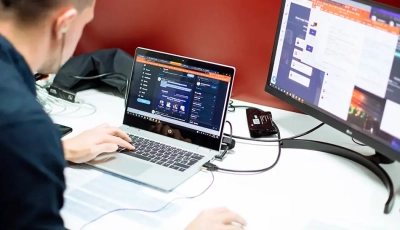
- Reliable, enterprise-grade WiFi designed for remote work
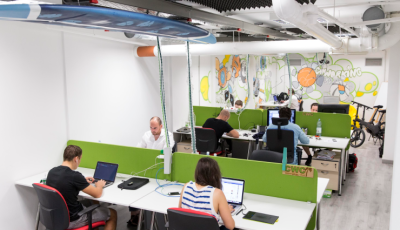
- Coworking space included
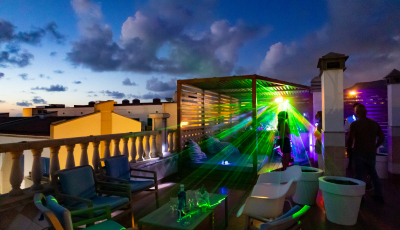
- Community events and introductions built in
- Someone who knows the city and can answer your questions
The all-in coliving package is typically €900–€1,500/month. The all-in Airbnb + coworking + utilities equivalent is often €1,100–€1,600/month — and comes with none of the community.
The Cost Breakdown: Real Numbers
| Category | Airbnb (1-bed, city centre) | Coliving (private room) |
|---|---|---|
| Accommodation | €900–€1,200 | €900–€1,500 (all-in) |
| Utilities (electricity, water) | +€80–€150 (often separate) | Included |
| Coworking membership | +€100–€250 | Included |
| Cleaning | +€0–€100 (if not included) | Included |
| Community / events | €0 (but requires effort) | Included |
| Monthly reality | €1,100–€1,700 | €900–€1,500 |
The WiFi Problem No One Talks About Honestly
Airbnb WiFi is a lottery. The listing says “fast WiFi” and shows one router photo. What that actually means for a back-to-back day of calls and file uploads is something you only discover after you’ve moved in.

In coliving spaces designed for remote workers — like Repeople’s El Cabo in Gran Canaria — the internet infrastructure is built around people who depend on it professionally. Enterprise-grade routers, backup connections, fibre in each room. It’s not an amenity; it’s the product.
A week of bad WiFi in an Airbnb can cost you more in lost productivity and client goodwill than the monthly difference between the two options.
The Isolation Tax
This is the cost that doesn’t show up in any spreadsheet.
Remote work has a loneliness problem. Study after study on remote worker wellbeing identifies social isolation as the primary source of burnout and attrition. When you land in a new city via Airbnb, you’re starting from zero — no local context, no ready-made social circle, no one to eat dinner with on a Tuesday.
Most people underestimate how much energy it takes to build a social life from scratch in a new city, every 4–8 weeks. After a few months of this, the friction accumulates.
Coliving solves this by design. You check in and there are already people to talk to. Community events, shared dinners, co-working hours — the infrastructure for connection is there. You can ignore it if you want privacy; you can lean into it when you need it.
For couples like Lisa and Marc — two remote workers navigating nomadic life together — this matters even more. Having a community of people who understand your lifestyle, can recommend the best spots, and share meals takes the edge off the “we’ve just moved to a new country and know no one” feeling.
When Airbnb Actually Wins
Coliving isn’t the right answer for everyone in every situation. Airbnb (or a private long-term rental) makes more sense when:
- You need complete privacy and quiet. Some people work best in total silence, with full control of their environment. Shared common areas and community events can be disruptive if that’s your mode.
- You’re staying 3+ months. For very long stays, a proper apartment rental (not Airbnb, which doesn’t allow stays over 90 days) often becomes better value. You’re paying for consistency and space, and the community-building friction reduces once you’ve been somewhere long enough to build genuine local connections.
- You’re traveling with a partner and want your own space. Some couples strongly prefer their own apartment to manage their own rhythms, cooking schedule, and noise levels.
- You have very specific location requirements. If you need to be in a specific neighbourhood for a specific reason, coliving’s limited location options might not suit.
When Coliving Wins
Coliving is the stronger choice when:
- It’s your first time in a city or country. The onboarding support and local knowledge alone is worth the premium.
- You’re staying 1–3 months. This is coliving’s sweet spot — long enough for community to matter, short enough that the premium over a rental is justified.
- You’re working on a solo project and need external stimulation. The creative energy of a coliving space is a real asset for people who would otherwise spend the day alone.
- You’ve been on the road for a while and are feeling the fatigue. Community is the antidote. It doesn’t require effort in the way that building a social life from scratch does.
- You’re a couple trying to figure out nomadic life together. Having other nomad couples and individuals around normalises the lifestyle choices you’re making.
The Repeople Difference
Not all coliving is equal. The proliferation of spaces that call themselves coliving — but are really just shared apartments with a ping pong table — has understandably made some nomads skeptical.
Repeople’s approach in Gran Canaria focuses on what actually makes coliving work: reliable work infrastructure, curated community (not just whoever shows up), a balance of communal and private space, and a team that understands what remote workers need because they’ve been doing this for years.
El Cabo, Repeople’s flagship space, consistently gets mentioned by former residents as the place where the coliving model actually delivered on its promise.
Ready to try coliving in Gran Canaria? Explore our Colivings
A Framework for Deciding
Before booking, ask yourself:
- How long am I staying? Under 3 months → coliving. Over 3 months → consider a rental.
- How important is community to me right now? If you’re burning out on isolation, coliving is the intervention.
- What’s the actual all-in cost? Don’t compare room rates. Compare room + coworking + utilities + cleaning.
- How reliable does my internet need to be? If calls are your livelihood, don’t gamble on Airbnb WiFi.
- Is this a new destination? If yes, the local knowledge and soft landing of coliving pays for itself in week one.

Frequently Asked Questions
Is coliving more expensive than Airbnb?
Not necessarily, once you compare all-in costs. Coliving typically bundles accommodation, utilities, coworking, cleaning, and community into one price. When you add those elements to an Airbnb stay, the price difference narrows or disappears entirely.
What is the main advantage of coliving over Airbnb?
Community, convenience, and work infrastructure. Coliving provides a ready-made social network and a workspace designed for remote work — neither of which Airbnb provides by default.
Is coliving good for couples?
Yes, especially for couples navigating nomadic life for the first time. Having a community of like-minded people provides social support that prevents the “just the two of us against a foreign city” fatigue that many nomad couples experience.
How long should you stay in a coliving space?
1–3 months is the sweet spot. Long enough to form genuine connections and settle in, short enough that the all-inclusive premium over a market-rate rental makes sense.
Can you work from a coliving space?
Yes — that’s the point. Quality coliving spaces like Repeople’s El Cabo in Gran Canaria include dedicated coworking facilities with enterprise-grade internet designed for people who depend on connectivity professionally.
Repeople operates colivings in Gran Canaria designed for digital nomads and remote workers.
Get in touch to discover our different accommodation options →